where: - \( f = 7.2 \times 10^6 \, \text{Hz} \) - \( R_{\text{antenna}} = 79.54 \, \Omega \) - \( R_{\text{coax}} = 50 \, \Omega \)
### Summary of Known Values:
- **Antenna impedance (real part)**: \( 79.54 \, \Omega \)
- **Target impedance**: \( 50 \, \Omega \)
- **Frequency**: 7.2 MHz
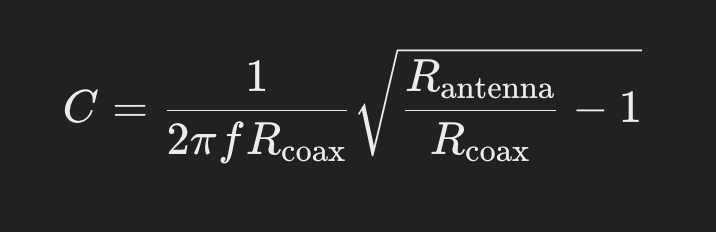
### Step 1: **Calculate the Series Capacitor** (\(C\))
The formula for the series capacitor in an L-network is:
where:
- \( f = 7.2 \times 10^6 \, \text{Hz} \)
- \( R_{\text{antenna}} = 79.54 \, \Omega \)
- \( R_{\text{coax}} = 50 \, \Omega \)
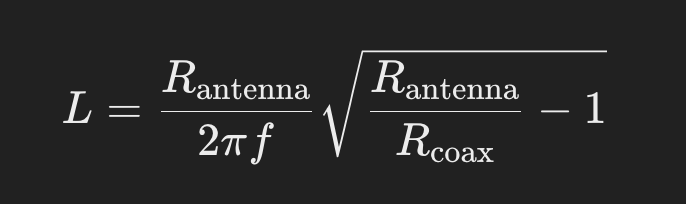
### Step 2: **Calculate the Parallel Inductor** (\(L\))
The formula for the parallel inductor is:
### Step 3: **Calculate Voltage and Current Ratings**
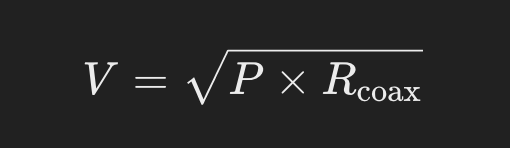
Power handling is crucial, especially for 100 watts and 1500 watts. To estimate the voltage and current ratings, we use the following:
- **Voltage across the components**:
- **Current through the components**:
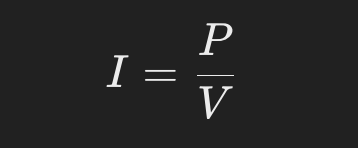
Where \(P\) is the transmitter power, and \(R_{\text{coax}} = 50 \, \Omega\).
### Calculations and Table:
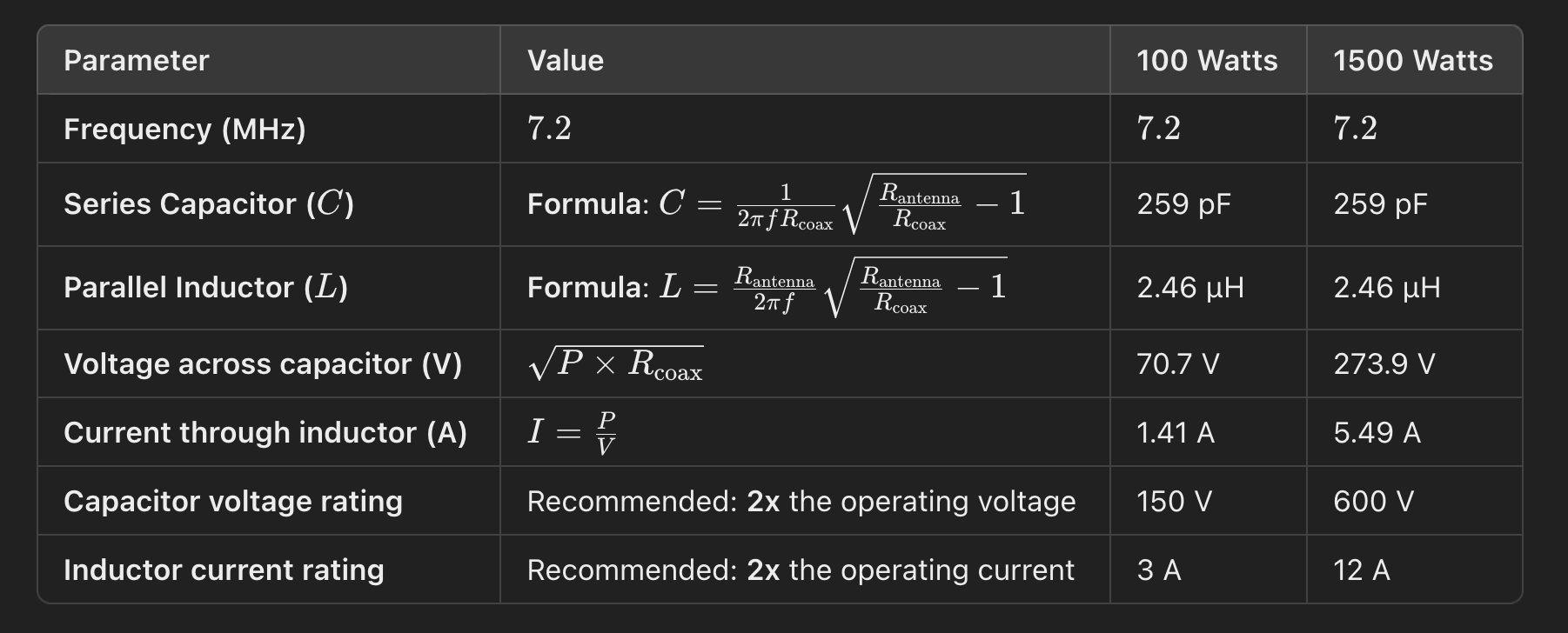
### Component Ratings: - **Capacitor**: Choose capacitors rated for at least **150 V** for 100 watts and **600 V** for 1500 watts. - **Inductor**: Use inductors with a current rating of at least **3 A** for 100 watts and **12 A** for 1500 watts.
### Notes: - These values are based on ideal assumptions. Actual performance will depend on factors such as component quality, Q factor of the inductor, and circuit losses. - You can purchase **mica capacitors** or **ceramic capacitors** rated for high RF power, and air-core inductors are recommended for high-power applications.
Let me know if you'd like any additional details!